
Commercial Roof Repair in New York: What Building Owners Need to Know
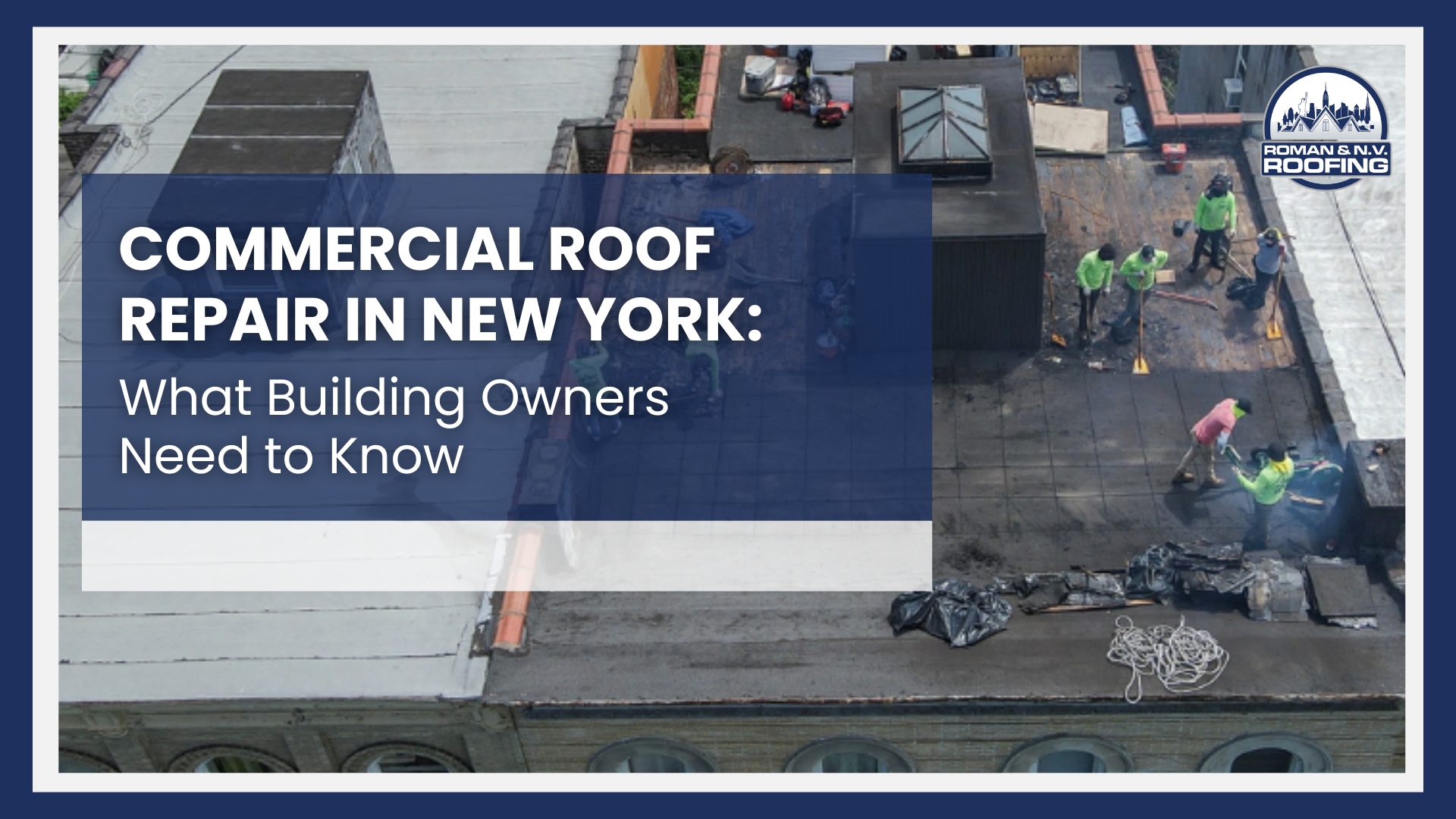
Here's a question that might hit closer to home than you'd expect: when did you last think about your commercial roof? Not the HVAC unit on top of it, not the drain that needs cleaning every fall. We mean the actual roof membrane, the flashing around your skylights, the seams holding your flat roof system together. For most building owners in New York, the honest answer is: not recently enough.
That's not negligence. It's the reality of owning or managing a commercial property in one of the most demanding urban environments on the planet. There's always something more visible competing for your attention. But here's what decades of experience in roof repair services in New York have taught us: the roofs that get ignored the longest always end up costing the most to fix. And in New York's climate, "the longest" often means just a few seasons.
Why Commercial Roofs in New York Fail Faster Than You Think
New York doesn't give roofs an easy life. Between January snowstorms that load flat roofs with hundreds of pounds of wet snow, spring deluges that probe every weak seam, summer heat that expands and contracts membrane materials daily, and fall winds that lift flashing and shift rooftop equipment, the average New York commercial roof is working hard twelve months a year.
Add to that the density of the urban environment. Rooftop HVAC units, satellite dishes, exhaust vents, and foot traffic from maintenance crews all create penetration points and high-wear zones that accelerate deterioration. On many commercial and industrial properties across the city, nobody is regularly inspecting these areas between issues, which means problems that could have been caught for a few hundred dollars quietly grow into repairs that cost tens of thousands.
This is the context that every building owner in New York needs to understand before a roofing issue lands on their desk.
The Most Common Commercial Roof Problems We See Across New York
After more than three decades of providing roof repair services in New York, certain problems show up again and again across building types, from office towers in Midtown to warehouse facilities in Queens to multi-family residential buildings throughout Brooklyn and the Bronx.
The most frequent culprits are surprisingly consistent:
Ponding water on flat roofs. Flat and low-slope roofs are the dominant system across New York commercial properties, and standing water that doesn't drain within 48 hours is a serious warning sign. Over time, it accelerates membrane breakdown and puts structural stress on the roof deck.
Flashing failures. Flashing is the metal edging and sealing material around rooftop penetrations: vents, HVAC curbs, parapets, and skylights. It's also one of the first things to fail, and when it does, water finds its way inside almost immediately.
Membrane seam separations. On EPDM, TPO, or modified bitumen systems, the seams are the most vulnerable points. Heat, UV exposure, and foot traffic gradually weaken adhesion, and once a seam opens, water infiltration is only a matter of time.
Blistering and bubbling. These surface abnormalities signal that moisture has become trapped between layers of roofing material. Left alone, they pop and create open pathways for water.
Clogged or damaged drains. Debris buildup in roof drains is extraordinarily common, and extraordinarily easy to overlook. A blocked drain during a heavy rain event can flood a roof system within hours.
None of these problems announce themselves loudly. Most develop quietly, underground, until the damage is already done.
A Scenario That Plays Out More Often Than It Should
Last year, the operations manager of a mid-size warehouse facility in Long Island City reached out to our team after noticing a cluster of water stains on the ceiling of their main storage area. The building had a modified bitumen flat roof that was roughly fourteen years old, past its ideal maintenance window but not necessarily at end-of-life.
When our crew conducted the inspection, what we found was a textbook case of deferred maintenance. Three seam separations had developed along the roof's eastern section, likely caused by the previous winter's freeze-thaw cycles. Two roof drains were partially blocked, causing consistent ponding in that area after rainfall. The ponding had been slowly saturating the insulation board beneath the membrane for months, maybe longer.
The good news: the structural roof deck was still sound. The damage, while extensive, was confined to the membrane and insulation layer. Targeted roof repair services restored the system to full working condition, and because we caught it before the deck was compromised, the cost was a fraction of what a full roof replacement would have required.
The operations manager's takeaway? "I thought it was just a cosmetic issue. I had no idea what was happening under the surface." That's almost always how it goes.
What Building Owners Should Actually Do
The biggest mindset shift for commercial property owners is moving from reactive to proactive. That doesn't mean obsessing over your roof. It means building a few simple habits into how you manage the property.
Schedule inspections at least twice a year. Spring and fall are ideal: after winter's punishment and before the heat of summer, then again before temperatures drop. A professional inspection from a qualified roofing contractor takes a few hours and gives you a complete picture of your roof's condition, documented in writing.
After any significant weather event, do a quick visual check. You don't need to get on the roof yourself. A walkthrough of interior spaces looking for new stains, drips, or musty smells, combined with a ground-level look at your roof edge and drains, often reveals early warning signs within minutes.
Keep records. Every inspection report, every repair receipt, every photo from a roofing contractor visit should be stored in a file for that property. When the time comes to make a repair-versus-replace decision, or to file an insurance claim, that paper trail is invaluable.
Respond quickly when something is flagged. The single most expensive decision in commercial roofing is waiting. A $400 flashing repair ignored for six months routinely becomes a $4,000 interior restoration. The math on acting quickly is always favorable.
Repair or Replace? How to Think About It
This is the question building owners dread, and it's rarely as complicated as it feels. In our experience delivering roof repair services in New York across residential, commercial, and industrial properties, the answer comes down to three factors: the age of the roof, the condition of the roof deck, and the extent of the damage.
If your commercial roof is under fifteen years old, the deck is structurally sound, and the damage is localized (seam repairs, flashing replacement, membrane patching), repair almost always makes more sense. A well-executed repair on a fundamentally sound system extends service life significantly and protects your investment.
If the roof is approaching or past its expected lifespan, if there are multiple failure points spread across the surface, or if the deck itself has been compromised by long-term moisture exposure, replacement is likely the more cost-effective long-term choice. Continuing to repair a roof that's at the end of its life is like patching tires that are bald. It buys a little time, but it doesn't solve the underlying problem.
A trustworthy roofing contractor will give you an honest assessment of where your roof falls. At Roman Commercial Roofing, we never recommend replacement when repair will do the job. But when replacement is the right call, we explain exactly why, in plain language, with the documentation to back it up.
What to Look for in a Commercial Roofing Contractor in New York
Not all roof repair services in New York are created equal, and commercial properties present a higher-stakes environment than residential work. When evaluating contractors, a few things matter more than price:
Licensing and insurance. New York has specific requirements for roofing contractors. Every contractor working on your commercial property should be fully licensed and insured, and should be able to prove it without hesitation.
Commercial experience. Flat roof systems, large-scale membrane work, and rooftop equipment integration require specialized expertise that not every residential roofer has. Ask specifically about their experience with your building type and roofing system.
Transparent communication. You should receive a written assessment, a clear scope of work, and a realistic timeline before any repair begins. Surprises in commercial roofing almost always mean extra costs.
Local knowledge. A contractor who has worked across New York's boroughs for decades understands the building stock, the climate demands, and the permitting landscape in a way that out-of-state or newly established companies simply don't.
Protect Your Building Before the Next Season Hits
Commercial roofing problems rarely resolve themselves, and New York's weather doesn't wait for a convenient time to cause damage. The building owners who manage their roofs well, scheduling regular inspections, responding promptly to early warning signs, and working with experienced professionals, consistently spend less on roofing over the life of their property.
Roman Commercial Roofing has been delivering trusted roof repair services in New York since 1987. We work with commercial property owners, building managers, and industrial facility operators across all five boroughs and beyond, providing honest assessments, durable repairs, and the kind of straightforward communication that makes a complex process feel manageable.
Don't wait until a leak shows up on your ceiling. Call Roman Commercial Roofing today for a professional commercial roof inspection and find out exactly where your building stands.
📞 Call us at (917) 440-1800 orschedule your free roof inspection online, and go into the next season knowing your roof is ready for whatever New York throws at it.
