
How Roof Coatings Extend the Life of an Apartment Building Roof
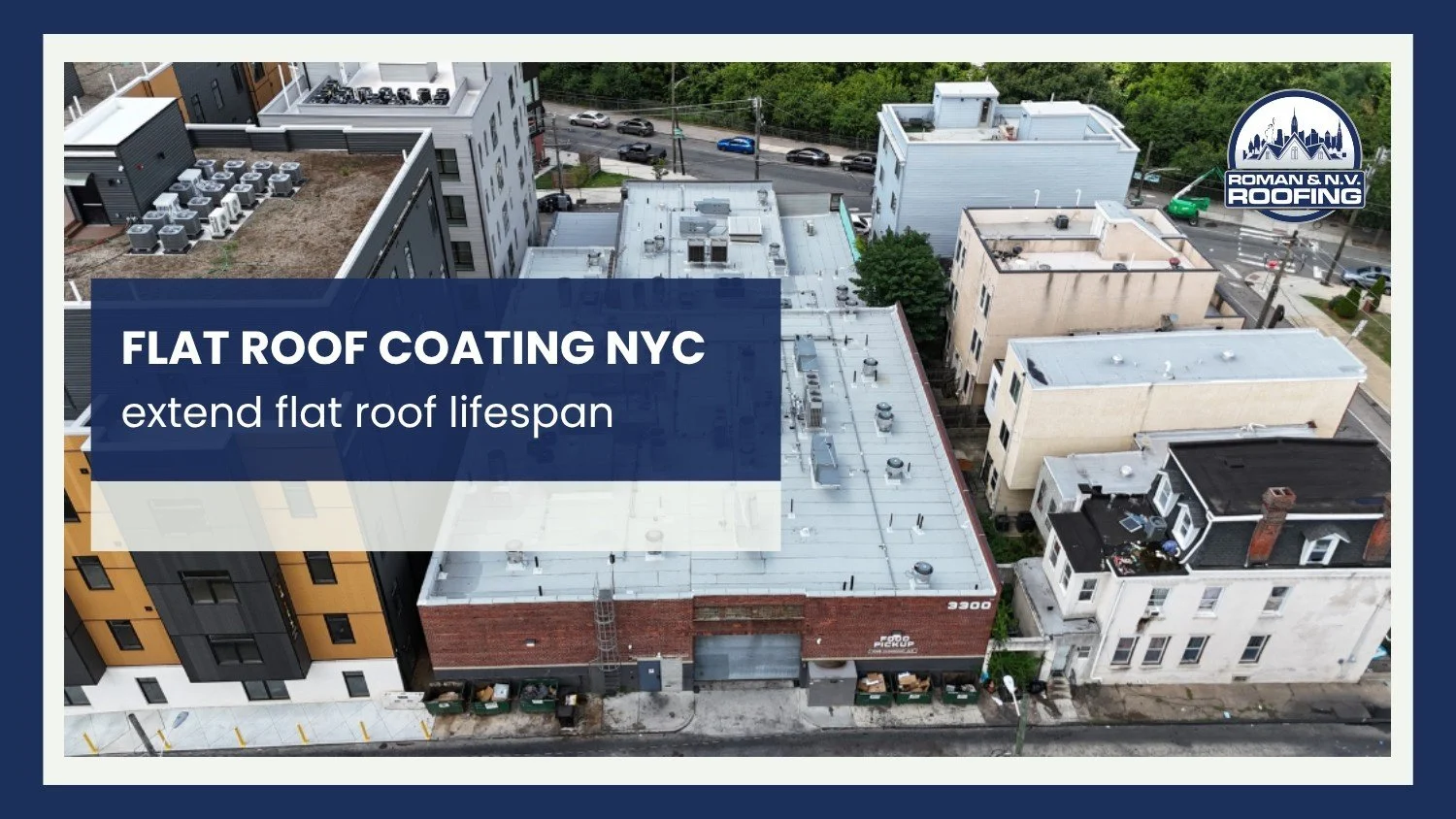
A roof coating on an apartment building roof does one thing above everything else: it buys time. Applied over an existing flat roof membrane, it seals minor surface failures, reflects heat, and creates a new protective layer that takes the beating instead of your existing roof system. Done at the right point in a roof's life, a coating can extend flat roof lifespan by 10 to 15 years without the disruption or cost of a full tear-off.
For building owners in Brooklyn and across New York City, that's a significant difference in both capital outlay and tenant impact.
What a Roof Coating Actually Does
A roof coating is a fluid-applied membrane layer that bonds directly to the existing roof surface. It's not a patch and it's not paint. It cures into a seamless, flexible membrane that covers the entire roof plane, including seams, laps, and penetrations where most leaks originate.
The coating works in a few ways at once:
Waterproofing: It fills in micro-cracks, dried seams, and surface erosion that allow water infiltration over time
UV protection: It blocks ultraviolet radiation, which is the primary cause of membrane degradation on flat roofs
Reflectivity: Most coatings are white or light-colored, reflecting solar heat instead of absorbing it, which reduces thermal expansion stress on the membrane below
Flexibility: It expands and contracts with temperature changes without cracking, maintaining the seal through NYC's full range of seasonal conditions
The result is a roof that stops deteriorating at the rate it was before and gets a meaningful extension on its functional life.
When Does a Roof Coating Make Sense for an Apartment Building
Timing is everything with roof coatings. A coating applied too late, over a membrane that's already failed structurally, won't solve the underlying problem. Applied at the right point, it's one of the most cost-effective maintenance decisions a building owner can make.
A flat roof coating in NYC is the right call when:
The existing membrane is 8 to 15 years old and showing surface wear but no structural failure
You're seeing minor ponding but drains are functional and the deck is solid
Seams are showing early signs of separation or brittleness
You want to defer replacement for 5 to 10 years while maintaining full waterproofing protection
The building has had minor leak activity that targeted repairs have addressed, but the overall membrane is aging
It's not the right call when the membrane has active delamination, the roof deck has rotted sections, or water has been sitting under the membrane long enough to compromise the substrate. In those cases, coating over the problem doesn't fix it, and a tear-off is the only durable solution.
A qualified flat roofing contractor should evaluate the existing membrane condition before recommending a coating. Core cuts or moisture scanning can confirm whether the deck and existing membrane are still sound enough to coat over.
How NYC's Climate Affects Flat Roof Lifespan
New York City puts flat roofs through a particular kind of stress. Summers bring intense UV radiation and heat island effects from surrounding pavement and buildings. Winters bring freeze-thaw cycles that expand and contract membrane materials repeatedly. And seasonal rain, sometimes heavy, tests every seam and drain on the roof.
Most flat roof membranes, whether EPDM, TPO, or modified bitumen, are designed for 20 to 25 years under normal conditions. But in urban NYC environments, that lifespan often runs shorter due to foot traffic from rooftop access, HVAC equipment vibration, and the heat island effect accelerating UV degradation.
A properly applied coating extends flat roof lifespan in NYC by:
Slowing UV degradation with a reflective surface layer that takes the radiation instead of the membrane
Reducing thermal shock by lowering rooftop temperatures, which cuts the daily expansion and contraction cycle
Eliminating active seam points by creating a continuous, monolithic layer over existing laps
Reducing ponding stress with a renewed waterproof surface that holds up to standing water between drain cycles
Studies by the Oak Ridge National Laboratory found that reflective roof coatings can reduce rooftop surface temperatures by 50 to 60 degrees Fahrenheit compared to uncoated dark membranes. In a city where flat roofs absorb significant summer heat, that reduction directly translates to less material stress and longer membrane life.
Types of Roof Coatings Used on Apartment Building Roofs
Not every coating is right for every roof. The right product depends on the existing membrane type, the building's history, and the performance goals.
Silicone coatings are the most durable option for ponding water resistance. Silicone doesn't degrade under UV exposure and holds up well in standing water, which makes it a strong choice for Brooklyn flat roofs where drainage isn't always immediate after heavy rain.
Acrylic coatings offer excellent reflectivity and are a cost-effective choice for roofs with good drainage where ponding isn't a regular issue. They perform well in UV-heavy environments but can soften under extended standing water.
Polyurethane coatings provide high tensile strength and impact resistance, useful for roofs with regular foot traffic from maintenance or rooftop equipment access.
Elastomeric coatings are a broad category that includes rubber-based products compatible with EPDM and modified bitumen systems. They flex well through temperature ranges and bond reliably to existing membrane surfaces.
A roofing contractor familiar with NYC building stock should match the coating type to your specific membrane and roof conditions.
What the Application Process Looks Like
Applying a roof coating on an apartment building isn't a one-day job done without preparation. The process matters as much as the product.
Here's what a proper coating application involves:
Full roof inspection to assess membrane condition, drain function, and any areas requiring repair before coating
Targeted repairs to any active seam failures, flashings, or penetrations — coating over active leaks doesn't stop them
Roof cleaning to remove dirt, biological growth, and loose material so the coating bonds to the membrane surface, not surface debris
Priming on certain membrane types to improve adhesion and ensure the coating bonds correctly
Coating application in multiple passes to achieve the specified mil thickness — most manufacturers require minimum wet and dry film thickness for warranty coverage
Seam and penetration reinforcement with fabric tape or additional coating at high-stress points before the field coat goes down
The application is typically completed in one to two days for a standard apartment building roof, with no need to vacate the building or interrupt tenant access.
Roof Coating vs. Full Replacement: The Cost Difference
For a building owner evaluating options, the numbers are straightforward. A full flat roof replacement in New York City for a mid-size apartment building typically runs between $12 and $25 per square foot depending on the system, membrane type, and tear-off requirements. A roof coating application runs $3 to $7 per square foot for most systems.
On a 5,000-square-foot apartment building roof, that's a difference of roughly $25,000 to $90,000 depending on scope and specifications.
The coating also preserves the existing membrane, which delays the eventual replacement cost further. If a coating extends the roof's useful life by 10 years, that's 10 years of deferred capital expenditure, lower insurance exposure, and fewer tenant disruption events from replacement work.
There are maintenance costs to factor in. Most coatings should be inspected annually and recoated on a 10 to 15 year cycle to maintain the protection layer. But even with recoating factored in, the total cost of a coating maintenance program over 20 years is consistently less than a mid-cycle replacement.
Questions to Ask Before Scheduling a Roof Coating
Before committing to a coating application, get clear answers on these points:
Is the existing membrane in condition to be coated, or does it need repair or replacement first?
What product is being specified, and what's the manufacturer's warranty on both material and application?
What's the minimum dry film thickness being applied, and how will it be verified?
Does the contractor carry appropriate insurance for work on occupied multi-unit residential buildings in NYC?
Will seams and penetrations be reinforced separately before the field coat goes down?
A contractor who can answer these clearly is one who understands the difference between a coating that performs and one that just covers the surface.
FAQ: Roof Coatings for Apartment Buildings
How does a roof coating extend flat roof lifespan? A roof coating adds a new protective layer over the existing membrane, blocking UV radiation, sealing minor surface cracks and seam failures, and reducing thermal stress from temperature swings. This slows degradation of the membrane below and can extend its functional life by 10 to 15 years without a full replacement.
Is a flat roof coating worth it for NYC apartment buildings? Yes, when the existing membrane is in sound condition. A coating costs significantly less than a full replacement and defers the capital expense while maintaining waterproofing performance. For building owners managing occupied residential buildings in Brooklyn and the five boroughs, it also minimizes tenant disruption compared to a tear-off replacement.
How long does a roof coating last on an apartment building roof? Most quality roof coatings last 10 to 15 years before recoating is needed. Longevity depends on the product type, application thickness, roof drainage conditions, and annual maintenance. Silicone-based coatings tend to perform longer under ponding water conditions common on NYC flat roofs.
Can you coat a roof that's already leaking? Not without addressing the leaks first. A coating applied over active leak points doesn't stop water entry at the source. Any failing seams, cracked flashings, or penetration failures need to be repaired before a coating is applied. A proper coating application starts with a thorough inspection and targeted repairs.
What's the difference between a roof coating and a roof membrane replacement? A roof membrane replacement removes the existing system down to the deck and installs a new membrane from scratch. A roof coating is applied over the existing membrane as a protective layer. Replacement is necessary when the membrane or deck has failed structurally. Coating is appropriate when the membrane is aging but still sound.
Is a Roof Coating the Right Move for Your Building
A roof coating is one of the more straightforward maintenance investments a building owner can make. It protects what's already there, extends the life of the existing system, and defers a much larger capital cost without compromising waterproofing performance.
The key is timing. Getting a coating on before the membrane reaches the point of no return is what makes the economics work. Once a roof is far enough gone, coating isn't an option anymore.
If you own or manage an apartment building in Brooklyn and want to know whether your flat roof is a candidate for coating,get in touch with our team to assess the current membrane condition and get a straight answer on whether coating or replacement is the right next step.
